GENERAL
01What is the BLSTR sander?+
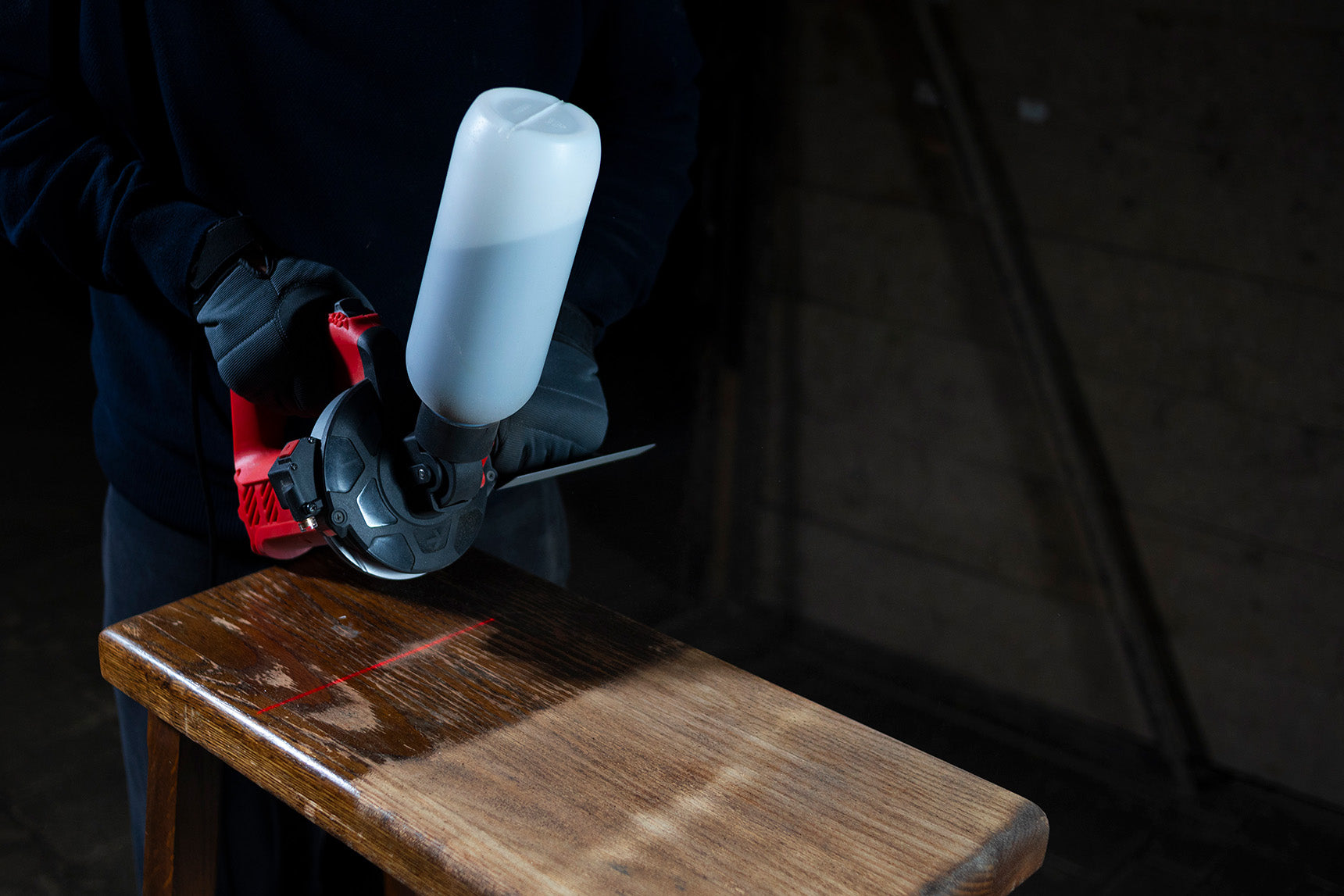
The BLSTR sander is a portable electric abrasive blasting tool that performs true abrasive blasting without requiring an air compressor. Instead of compressed air, a high-speed ceramic blast wheel accelerates abrasive media onto the surface. It is designed for professional surface preparation, localized coating removal, rust removal and maintenance work where mobility, rapid deployment and coating-ready surface quality are more important than maximum production speed. The machine fills the gap between hand tools such as grinders and industrial blasting installations.
02Which problems does the BLSTR sander solve?+
It eliminates the need to transport compressors, blast pots and hoses for small and medium-sized jobs. Typical users spend far less time setting up equipment, making it ideal for maintenance, repair, inspections, touch-ups and work at difficult-to-access locations.
03Which types of corrosion and coatings can the BLSTR sander remove?+
The BLSTR sander is intended for removing atmospheric rust, heavy corrosion, mill scale, paint, epoxy, powder coating, primers, anti-fouling coatings, oxidation and many industrial contaminants. Actual productivity depends on coating thickness, abrasive selection and substrate condition. It is best suited to localized work rather than large open blasting projects.
04Which materials can be treated?+
Typical substrates include carbon steel, stainless steel, cast iron, aluminium, galvanized steel, brick, concrete, natural stone and timber. The correct abrasive and technique should always be selected for the material. A test area is recommended for delicate or decorative surfaces.
05Why is abrasive blasting preferred before coating?+
Abrasive blasting removes corrosion and contamination while creating an anchor profile that allows coatings to mechanically bond to the substrate. This generally produces better long-term coating performance than methods that only clean or polish the surface. Required cleanliness and profile should always match the coating manufacturer's specification.
06Which surface preparation standards can be achieved?+
Depending on the substrate, coating and abrasive used, the BLSTR sander can prepare surfaces equivalent to commonly specified cleanliness levels such as Sa 2, Sa 2½ and, under suitable conditions, Sa 3. Results always depend on correct abrasive selection, operator technique and inspection criteria.
07How do I select the correct abrasive?+
Choose the abrasive according to the substrate, coating, desired surface profile and productivity. Aluminium silicate is an excellent all-round choice for maintenance. Coal slag provides aggressive cutting on heavy coatings. Garnet offers low dust and a consistent, controlled cutting action. Steel grit is suitable for demanding industrial work where compatible with the application. Avoid damp or contaminated media, as this reduces flow and performance.
08Which particle size should I use?+
Medium particle sizes generally provide the best compromise between flow and cutting performance. Very coarse particles may restrict media flow, while excessively fine media may generate more dust and lower productivity. Follow the machine recommendations and select the size that matches the required anchor profile.
09When is the BLSTR sander a better choice than compressor blasting?+
It is most advantageous for maintenance, repairs, spot blasting, fabrication shops, field service and mobile work. For very large continuous blasting projects, conventional compressor systems remain more productive. The BLSTR sander focuses on reducing total job time by eliminating transport and setup.
10How does the BLSTR sander compare with other surface preparation methods?+
Compared with grinders it avoids directional scratches and creates an anchor profile. Compared with wire brushes it removes contamination rather than polishing it. Compared with needle scalers it provides a blasted finish. Compared with laser cleaning it generally requires a much lower investment and produces a mechanical profile. Compared with chemical stripping it avoids chemical waste and neutralisation.
11What should operators know about safety and environmental aspects?+
Operators should always wear suitable eye, hearing and respiratory protection together with gloves and protective clothing. Dust generation depends on the coating and abrasive used. The BLSTR sander is not ATEX certified and should not be used in explosive atmospheres. Environmental impact depends primarily on the abrasive selected and the waste being removed. Collecting spent abrasive and disposing of contaminated waste correctly are recommended best practices.
12How can I maximise machine life and performance?+
Use clean, dry abrasive, inspect wear parts regularly, empty the hopper after use, clean accumulated dust and replace worn consumables before they affect blasting quality. Consistent maintenance improves reliability, productivity and the consistency of the surface profile.
13What are the most common causes of poor performance?+
The most common issues are damp abrasive, incorrect particle size, contaminated media, a worn blast wheel, inconsistent working distance and unsuitable operator technique. Verifying these items resolves the majority of performance complaints without major repairs.
14Is the BLSTR sander the right solution for every blasting project?+
No. The BLSTR sander is designed to complement, not completely replace, traditional blasting systems. It is the preferred choice when mobility, ease of use and rapid deployment are priorities. For high-volume production blasting over very large areas, conventional compressor installations remain the more productive solution.
15Is training available?+
Most users learn quickly, and distributors can provide product guidance where required.
16What does the BLSTR sander cost?+
The machine price shown on the product page is the complete price, VAT included. It includes the side handle, hand-protection shield, ten laser-pointer caps, the manual, and a carry bag on website orders. Abrasive grit is a separate consumable, ordered either from us or from another supplier.
17Do I need a compressor or any other equipment?+
No. There is no compressor, blast pot or air line. The machine runs from a standard 230–240 V socket and throws the abrasive with a ceramic blast wheel spinning at high speed, which removes the setup and transport that conventional blasting requires.
18Can it be used indoors?+
It can, with preparation. This is real abrasive blasting, so it produces dust and spent grit that have to be contained and collected. Indoors that means masking the area, protecting whatever you are not treating, and wearing the recommended protective equipment.
19Is the abrasive reusable?+
No. The grit is single-use: it breaks down while it works, so it is collected and disposed of after blasting rather than run through the machine again. Treat it as a consumable that needs replacing when you plan a job.
20Where can I buy grit?+
Official BLSTR grit can be ordered from the store, though because of its weight delivery is limited to selected countries. Where we cannot ship it, the grit guide sets out which abrasives are compatible so a suitable medium can be sourced locally.
21What warranty applies?+
The statutory legal warranty applies to defects. If something is wrong with the machine, contact support with your order details and they will arrange the next step. Wear parts and abrasive are consumables and are treated separately from that.