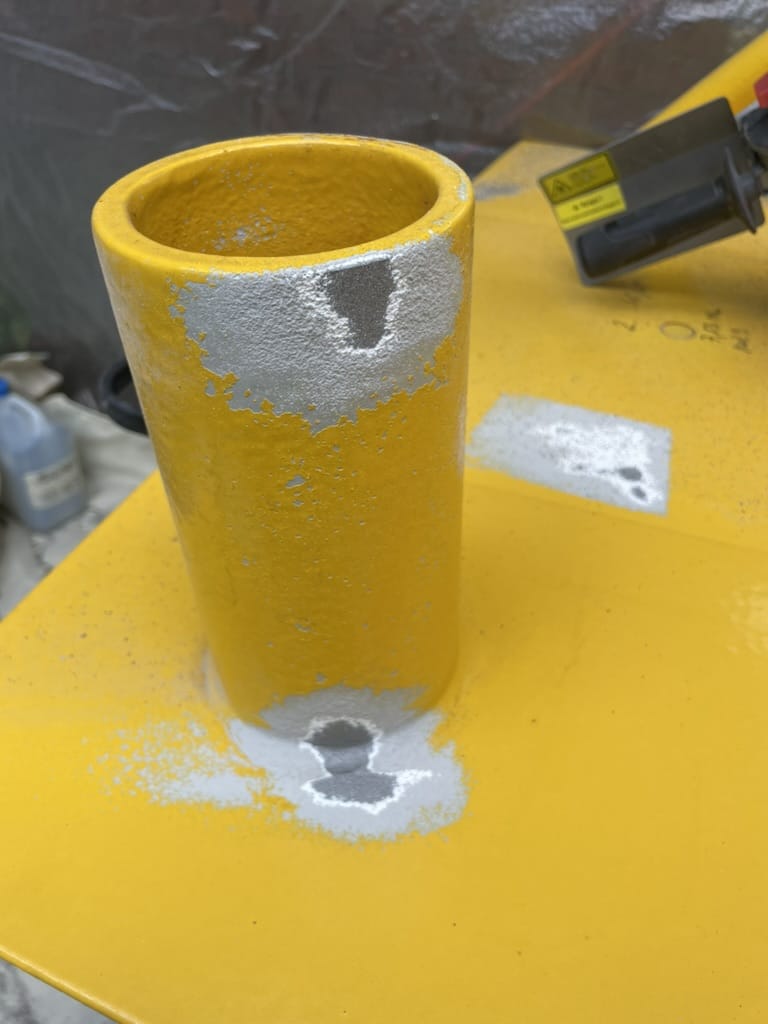
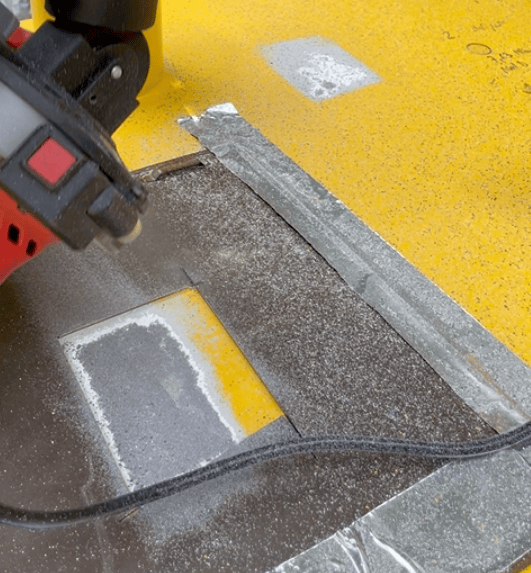
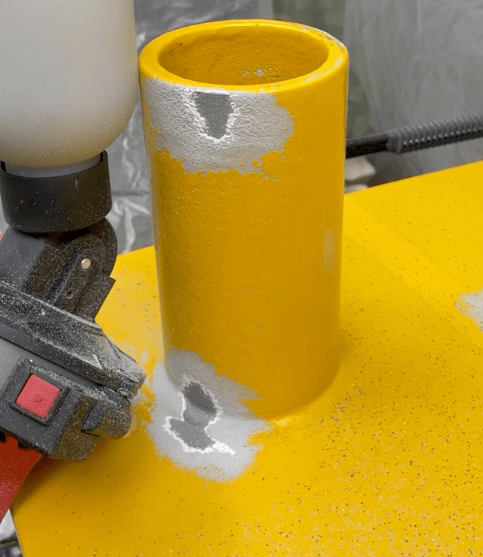
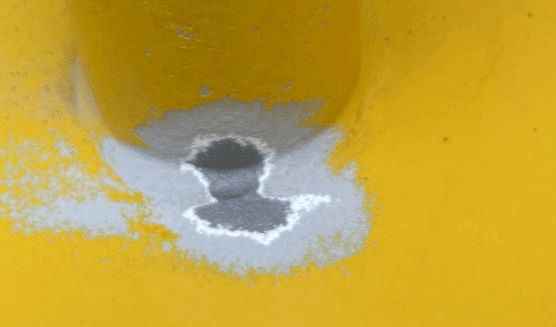
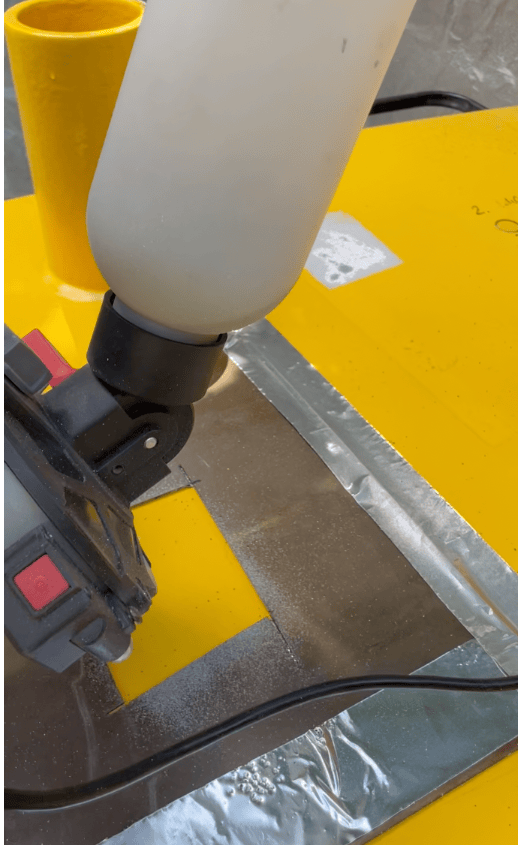
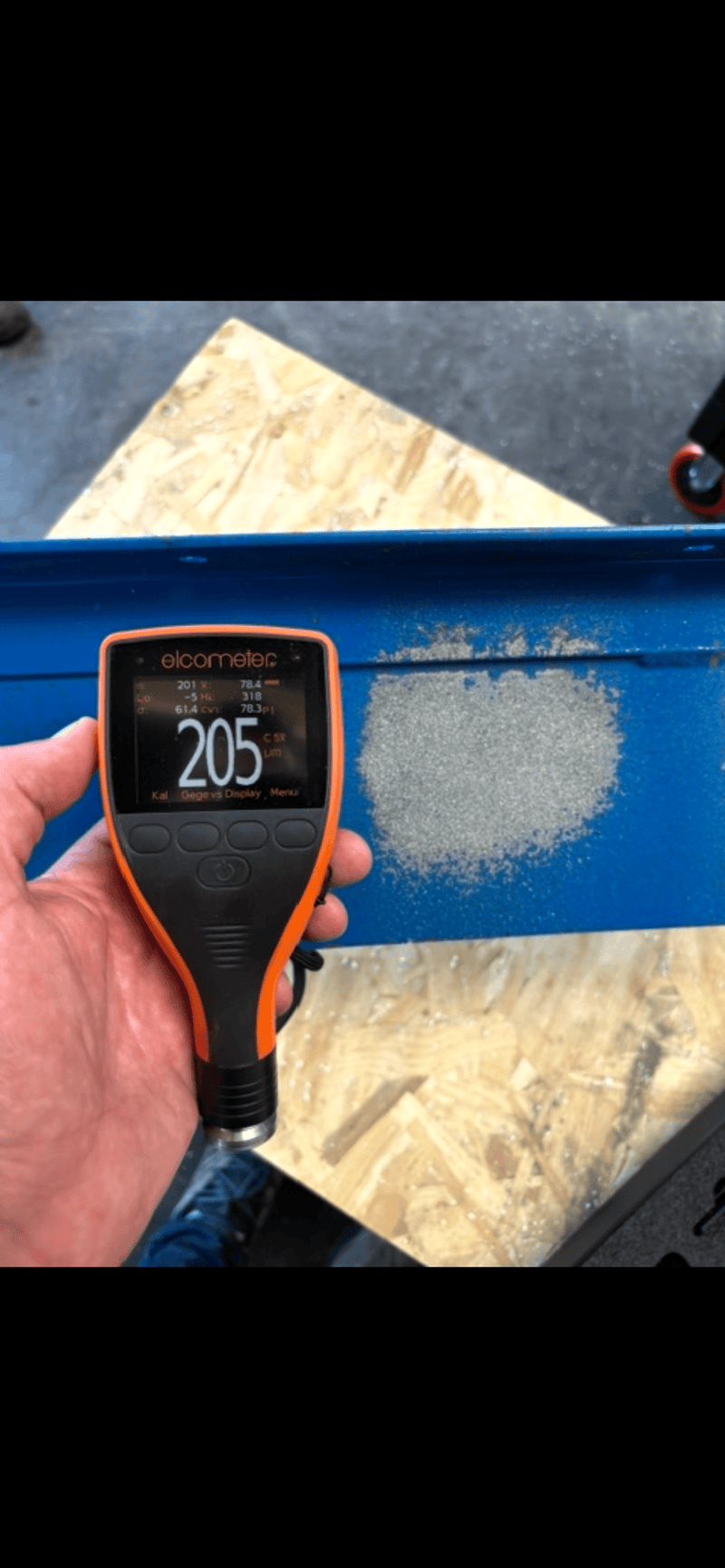
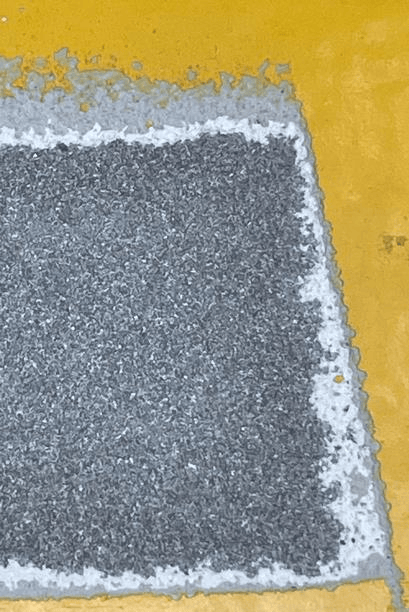
GH50 steel grit spot-repair sequence A - 2:17m: industrial coating fully removed to bare metal

Industrial Surface Preparation

Portable abrasive blasting for professionals — remove coatings, mill scale and corrosion and create a clean anchor profile, without compressors, hoses or pressure vessels.

Electric poweredNo compressorFast setupPrecise resultsLow dust emission

A new category of surface preparation

Industrial maintenance demands equipment that is efficient, portable and immediately available. Until now, professionals had to choose between conventional power tools and industrial abrasive blasting. Power tools are portable but too slow for heavy coatings, corrosion and mill scale — and because they work by mechanical abrasion, they can round the surface and struggle to hold a proper anchor profile. Industrial blasting delivers outstanding results but relies on compressors, hoses, pressure vessels and extensive setup, making it impractical for localized maintenance and repair.

The BLSTRsander changes that. By combining true abrasive blasting performance with the simplicity of an electric handheld tool, it removes industrial coatings, corrosion and mill scale while preparing steel for recoating — without compressors, hoses or pressure vessels. From fabrication workshops to construction sites and maintenance at height, it enables professional surface preparation wherever electricity is available.

Discover how portable abrasive blasting is creating a new category of professional surface preparation.

Industrial test data

Measured Performance

Testing on industrial substrates demonstrates the BLSTRsander’s ability to remove corrosion and demanding coating systems while creating a consistent anchor profile. Surface cleanliness up to Sa 2.5 according to ISO 8501-1 / SSPC-SP 10 was achieved during testing.

Measured Test Results

Abrasive Application Measured Result
GH50 Steel Grit Removal of a 98 µm powder coating from S235 steel 203 µm anchor profile Sa 2.5
GH50 Steel Grit Removal of a 1,230 µm three-layer industrial coating with an adhesion strength of 7.63 MPa 100 µm anchor profile Sa 2.5
GH80 Steel Grit Removal of a 98 µm powder coating from S235 steel 55 µm anchor profile Sa 2.5
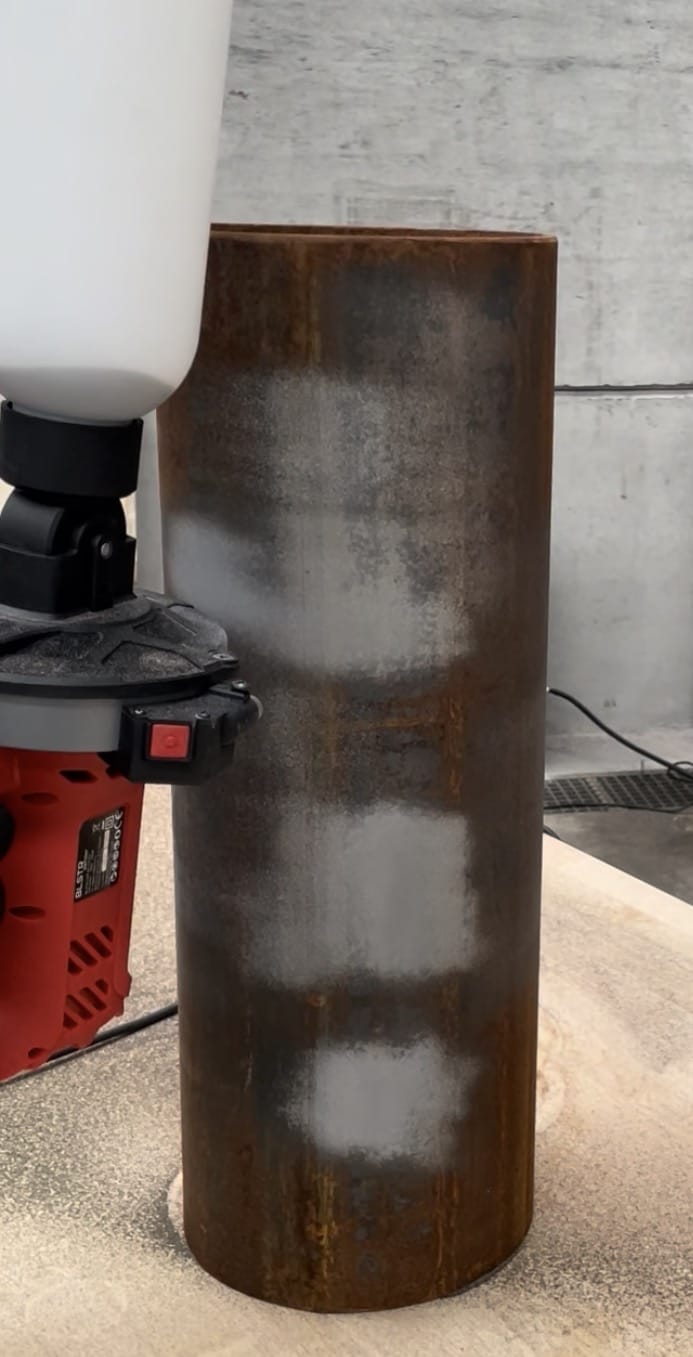
Aluminium Silicate Rust and corrosion removal from carbon steel Clean bare steel Ready for coating
2:17 minutes
Verified coating-removal test

A 1,230 µm three-layer industrial coating with an adhesion strength of 7.63 MPa was completely removed in 2 minutes 17 seconds, using 400 g of GH50 steel grit.

Abrasive Selection Guide

Abrasive selection influences removal speed, surface profile, media consumption, dust generation and the final appearance of the substrate.

Abrasive Best Suited For Typical Effect Reusability Relative Dust Level
GH50 Steel Grit Heavy industrial coatings, thick paint systems, severe corrosion and aggressive surface preparation High removal rate and a deep, pronounced anchor profile Very high Low
GH80 Steel Grit Powder coating, medium coating systems, general steel preparation and controlled profiling Finer and more controlled profile than GH50 Very high Low
Aluminium Silicate Rust removal, paint removal and general-purpose preparation of steel, stone and masonry Effective cleaning with a medium surface profile Limited Medium
Crushed Glass General cleaning, lighter corrosion, masonry, concrete, stone and selected non-ferrous substrates Angular cutting action with a generally moderate profile Limited Medium
Garnet Precision surface preparation, controlled coating removal, stainless steel and applications requiring lower contamination Consistent cutting action and a controlled anchor profile Medium Low to medium
Aluminium Oxide Hard coatings, demanding preparation work, precision blasting and high-performance applications Aggressive cutting action and a sharp anchor profile High Low to medium

Validated Industrial Applications

01
Heavy Coating Removal

Removal of thick, multi-layer industrial coating systems.

02
Powder Coating Removal

Removal of durable powder coatings from steel components.

03
Corrosion Removal

Removal of rust and oxidation to expose clean bare steel.

04
Mill Scale Removal

Preparation of hot-rolled steel before coating or fabrication.

05
Surface Profiling

Creation of an anchor profile for improved coating adhesion.

06
Spot Repair

Localised preparation without blasting an entire structure.

07
Weld Area Preparation

Removal of contamination, residue and discolouration around welds.

08
Stone and Concrete Cleaning

Removal of paint, graffiti and surface contamination.

Test results are application-specific. Actual performance depends on the substrate, coating composition and thickness, initial corrosion grade, abrasive type and particle size, operating technique and desired surface finish. Always test the selected abrasive on a small, inconspicuous area before treating the complete surface.

Industrial coating removal result - 1230 micron 700MPa coating blasted to 100 micron Sa2.5

Industrial applications

Every application benefits from reduced setup time, lower abrasive consumption and precise treatment of only the required area.
Coating Removal

Coating Removal

Removes epoxy, polyurethane, powder coatings and other industrial paint systems before inspection or recoating. Treating only damaged areas makes maintenance faster and more economical.
Mill Scale Removal

Mill Scale Removal

Removes mill scale from structural steel, fabricated components and welded assemblies to expose clean steel ready for coating — improving adhesion and extending asset life.
Corrosion Removal

Corrosion Removal

Removes rust precisely where maintenance is required. Dry media and no compressed-air tank mean no added moisture — reducing flash rust and keeping the surface coatable longer.
Surface Preparation

Surface Preparation

Creates a clean, consistent anchor profile for primers and protective coatings. Concentrating on the repair area reduces labour, abrasive consumption and downtime while maintaining outstanding adhesion.
Weld Cleaning

Weld Cleaning

Removes weld contamination, slag residue and discoloration and provides a clean surface profile for optimal coating adhesion.
Spot Repair

Spot Repair

Restores small damaged areas quickly and accurately, reducing production interruptions and maintenance costs — ideal when flexibility and speed matter more than a full blasting installation.

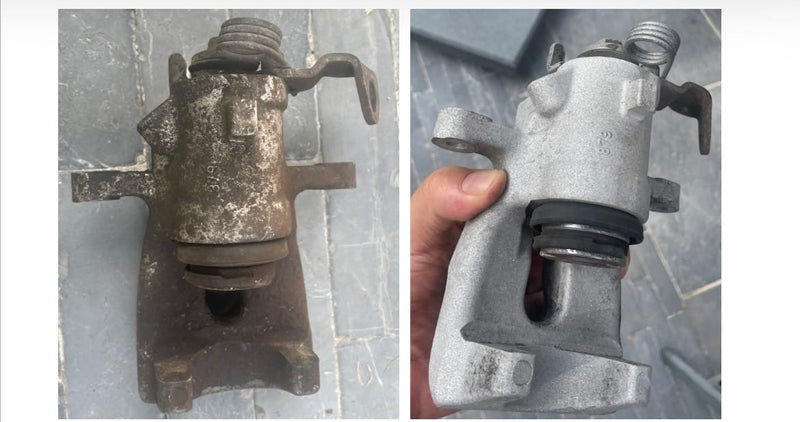
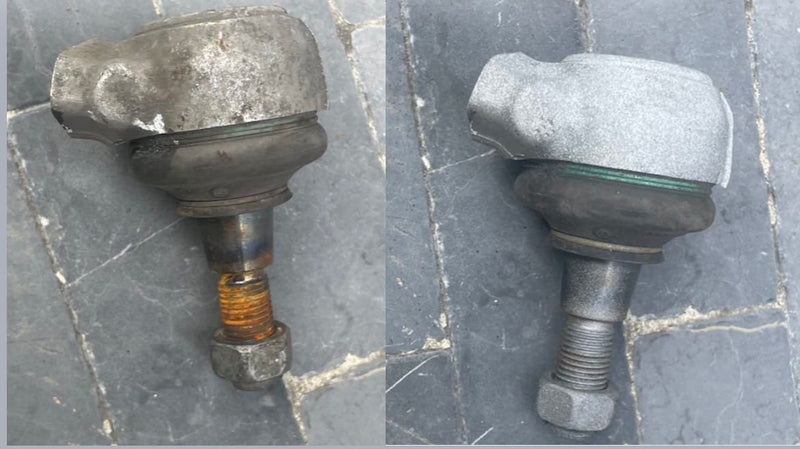
removes grease, rust, dirt from a engine part of a car in a few seconds

abrasive grit used: BLSTRsander grit / aluminium silicate
Flagship use case

Built for spot repair

The BLSTRsander wasn't built to replace large-scale blasting in fabrication shops. It was engineered for one of the most expensive challenges in industrial maintenance: localized surface preparation and spot repair.

Why it matters

Heavy multi-layer coatings — often over 1 mm dry film thickness — protect assets for decades. But once structures are transported, installed and in service, coating damage is unavoidable: transport and lifting damage, assembly scratches, weld repairs, and corrosion around bolts, welds and edges. Even a small damaged area exposes bare steel and becomes a starting point for corrosion.

The conventional problem

Repairing a few square centimetres the traditional way needs the same logistics as several square metres — compressors, hoses, blast pots, containment, dust control, safety barriers and extra crew. Often the mobilisation costs more than the blasting itself.

Connect to power, add abrasive, and prepare the surface exactly where it's needed — in confined spaces, at height or inside structures where compressor blasting is impractical.

Eliminate compressor mobilisationReduce setup timeLower labourFaster intervention after coating damageLess asset downtime
Read more about spot repair →
Industrial coating removal result - Steel S235 blasted to 100 micron Sa2.5

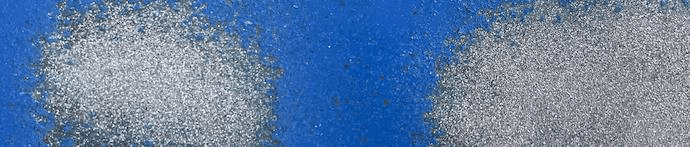
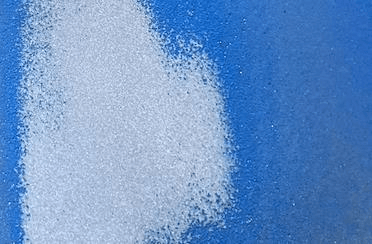
Fender of a car: 2 different kinds of abrasive grit

Built for industry

The BLSTRsander supports professionals across heavy and light industry — portable abrasive blasting with no lengthy setup.

Steel Fabrication

Mill scale, weld contamination and localized corrosion on fabricated components before coating.

Industrial Maintenance

Shutdown work, preventive maintenance, inspection and corrective repairs — no compressors or complex installation.

Infrastructure

Bridges, guardrails and steel structures; localized surface preparation directly on site.

Marine

Ships, docks, harbour equipment and containers; rapid coating removal and corrosion repair.

Energy

Wind turbines, substations, power plants, oil & gas and pipelines; prep for inspection and recoating.

Rail & Transport

Freight wagons, locomotives, trailers, trucks and containers; corrosion removal and repaint prep.

Automotive

Chassis, truck frames, trailers, classic-car restoration and heavy equipment; localized prep.

Marine & Yachts

Steel keels, aluminium masts, stainless fittings and painted components in marinas and boatyards.

No compressed-air hoses or blast lines across the floor — fewer trip hazards, easier confined-space access, safer work at height.

How it compares

Aspect BLSTRsander Rotating Steel Brush Laser cleaning
Creates anchor profile Yes Yes No
Removes rust & coatings Yes Yes Yes
Generates spent abrasive Yes No No
Airborne emissions Low–moderate (dust) Low–moderate (dust) High (fumes & vapours)
Dust/fume extraction Recommended Recommended Essential
Suitable before high-performance coatings Yes Yes Depends on profile

BLSTR sander vs. Traditional sandblasting

For industrial surface preparation — where each approach earns its keep.

  • Plug in and go — no compressor, blast pot or bulky setup
  • Portable and handheld — take the tool to the work
  • Targeted local preparation of only the required area
  • Safe at height — no hoses or blast lines across the floor
Traditional sandblasting
  • Strong for large-scale, high-output blasting
  • Requires compressor, hoses, pressure vessel and extensive setup
  • Needs significant space and site infrastructure
  • Less practical for localized or spot work

Cleaner by design

Abrasive and rotating steel brushing ultimately remove the same contaminants — rust, mill scale, paint and coatings — so the main environmental consideration is the material being removed, not the tool. When inert media such as aluminium silicate, garnet or glass are used, the abrasive itself has a low intrinsic impact; spent media should be collected and disposed of according to the contaminants it carries. The BLSTRsander also operates without a compressed-air system, reducing energy consumption compared with conventional blasting.

Lower impact: aluminium silicate · garnet · glass — Higher impact: coal slag · plastic media.

Why professionals choose the BLSTRsander

Professionals choose the BLSTRsander because it delivers industrial surface preparation without the complexity of traditional blasting systems. No compressor, no pressure vessel and virtually no setup time mean faster interventions, lower investment and greater flexibility — a practical solution for modern maintenance teams seeking professional results wherever the job takes them.

Steel fabricators Industrial contractors Asset owners EPC companies Coating contractors Rental companies Maintenance teams Shipyards Infrastructure contractors

Trusted for demanding industrial steelwork — and just as capable in a workshop, garage or restoration project.

Good to know

Real blasting power means real dust

The BLSTRsander is compact, handheld and compressor-free — but the work itself is still abrasive blasting. Use it in an environment suited to surface-preparation work, with proper ventilation, protection and control around the work zone.

Best used in

  • Prepared work areas
    Dedicated blasting or prep zones set up for the task.
  • Ventilated industrial spaces
    Fabrication shops, restoration ateliers and maintenance workshops.
  • Outdoor prep zones
    Yards, laydown areas and on-site locations.
  • Controlled restoration bays
    Enclosed areas with extraction and dust control.
!

Less suitable in

  • Finished indoor spaces where dust could settle.
  • Occupied areas without a dedicated blasting-safe zone.
  • Small enclosed spaces without airflow or extraction.
  • Near sensitive components that cannot be protected.

Proper containment and extraction turn real blasting power into clean, controlled surface preparation.

Support

Industrial use: your questions answered

How the BLSTR sander is used across industrial maintenance and repair work.
  • Which industries benefit most?

    Oil & gas, marine, fabrication, infrastructure, rail, mining, power generation, automotive restoration and facility maintenance all benefit from fast localized blasting.

  • Why is the BLSTR sander valuable in industrial maintenance?

    Its portability allows maintenance teams to perform localized repairs quickly without transporting large blasting equipment.

  • Can it be used in marine maintenance?

    Yes. It is suitable for localized corrosion removal, coating preparation and repair work on marine structures.

  • Is it suitable for offshore applications?

    Where electrical power is available and work procedures allow, the compact design makes it practical for maintenance tasks.

  • Can bridge maintenance contractors benefit?

    Yes. Portable blasting is advantageous for localized repairs where access is limited.

  • Can fabrication shops use it daily?

    Yes. It is useful for weld preparation, touch-ups and small production batches.

  • Is it suitable for railway maintenance?

    Yes. It supports localized repair and coating preparation on rail infrastructure and equipment.

  • Can it be used in automotive restoration?

    Yes. Chassis, frames and steel components are common applications.

Still got questions?

Can’t find the answer you’re looking for? Please contact us.

BLSTR Sander V2.0

Ready to improve your surface preparation?

Whether you are a fabrication company, maintenance contractor, industrial distributor or asset owner, the BLSTRsander offers a modern alternative for localized abrasive blasting. Contact our team to discuss your application.

Shop the BLSTRsander