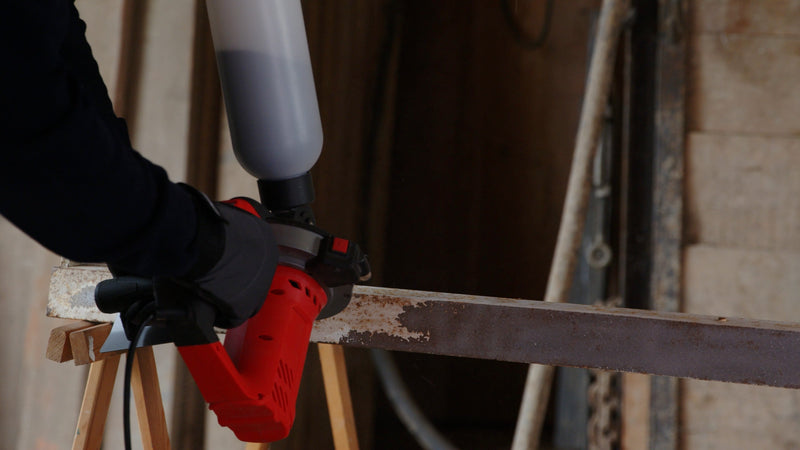
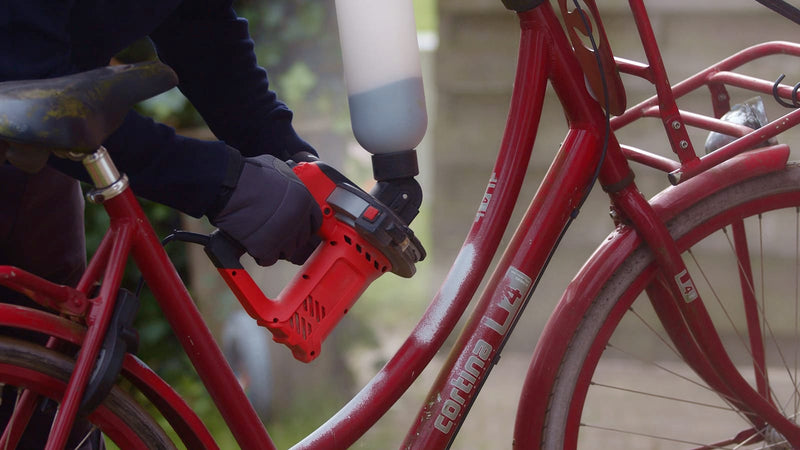
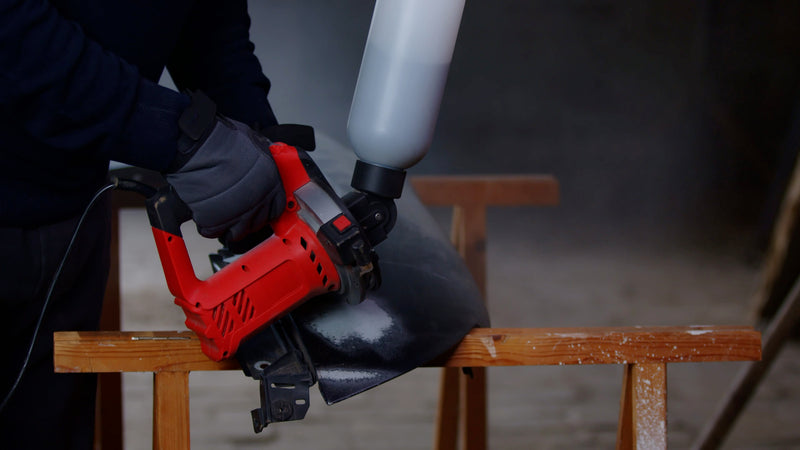
BLSTR sander for Rust & Metal
Remove rust & paint from metal surfaces with more freedom and less setup
Built for railings, brackets, weld zones, classic car parts, decorative ironwork, profiles and hard-to-reach metal surfaces where hand sanding is slow and traditional blasting setups are too much hassle.
A powerful way to tackle detailed metal restoration with the flexibility of a handheld, compressor-free tool.
Made for metal restoration and surface preparation
Metal restoration often gets difficult the moment the surface is shaped, detailed or awkward to reach. Rust hides in corners, old paint sits in profiles, and many parts take far too long to clean by hand.
BLSTR helps remove rust and old paint from metal surfaces with speed, control and mobility. No bulky compressor. No complicated setup. Just a more accessible way to approach metal restoration and prep work.
From classic car components to gates, frames, weld areas and decorative ironwork, BLSTR is built for real restoration jobs.
Why the BLSTR sander for metal?
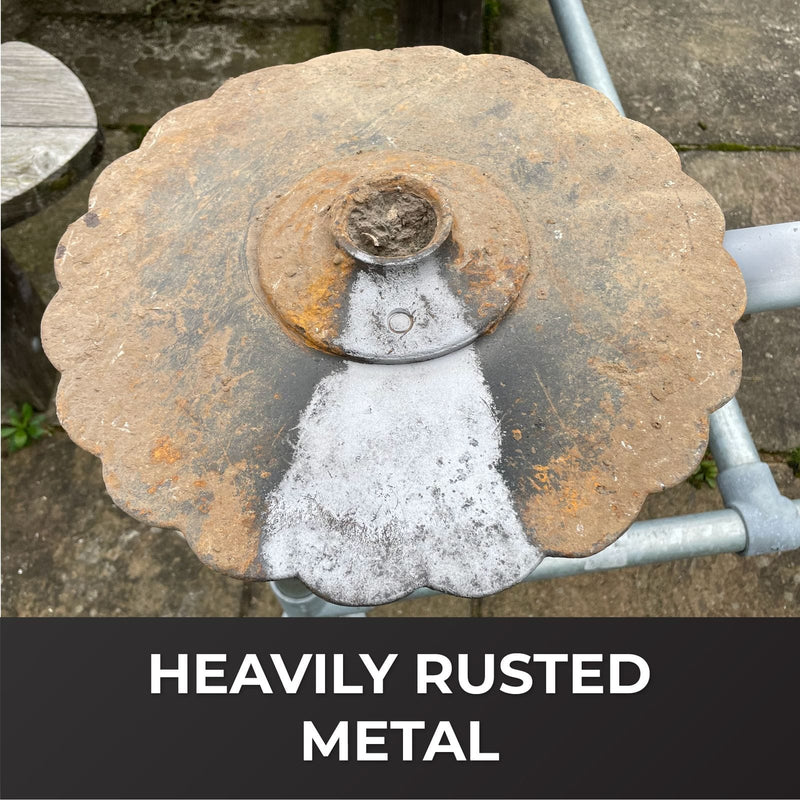
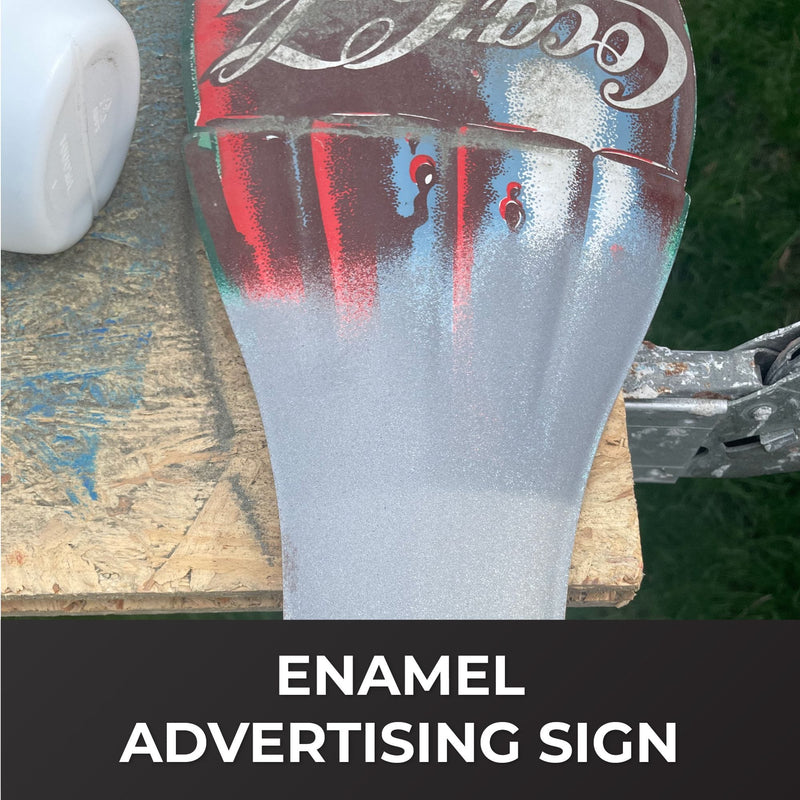
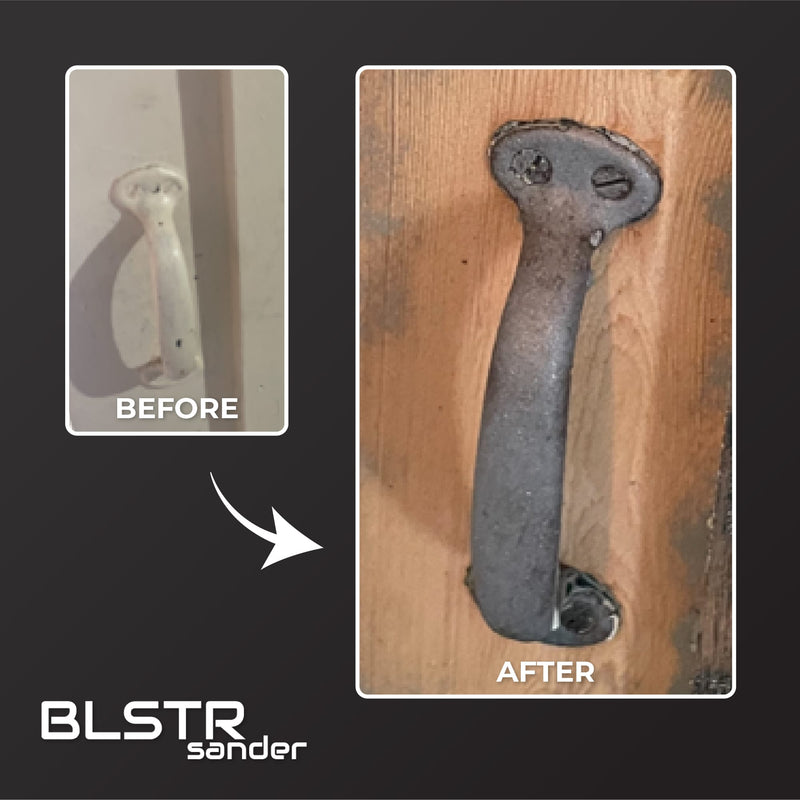
Ideal for rust and coating removal
Useful on detailed metal surfaces
Perfect for classic car and restoration work
No compressor needed
Adjustable for control
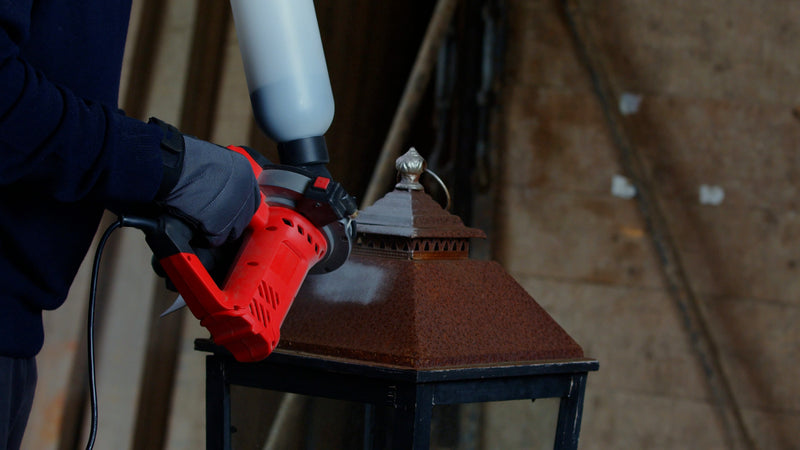
Lightweight and handheld
BLSTR sander in action
Real videos: uncut and in full length
Perfect for removing paint from metal.
Remove rust from old metal with precision and speed.
BLSTR Sander vs. Traditional sandblasting
For metal restoration and surface preparation, a quick view of where each approach fits best.
- Plug in and go, no compressor, blast pot or bulky setup
- More accessible for restoration, prep work and targeted blasting jobs
- Useful on railings, brackets, weld zones, profiles and detailed metal parts
- Practical for restoration bays, prepared work areas and on-location detail work
- Strong for larger-scale blasting work and high-output surface stripping
- Requires more equipment, more setup time and more working space
- Less convenient for quick restoration jobs or targeted work on smaller parts
- Often less practical when mobility, flexibility and ease of use matter
Real blasting power means real dust
The BLSTR sander is compact, handheld and compressor-free, but it is still a real blasting tool. Make sure your workspace is suitable for blasting work, with proper ventilation, protection and enough room to work safely.
Best used in
-
Prepared work areasSpaces set up for surface preparation, where dust, debris and protective measures are already part of the workflow.
-
Ventilated industrial or restoration spacesSuitable for metal restoration and prep work on parts, frames, railings and detailed components.
-
Outdoor prep zonesUseful for gates, fences, weathered metalwork and other jobs where open-air working conditions are preferred.
-
Controlled restoration baysA practical fit for classic car parts, motorcycle components, brackets, weld areas and other detailed metal restoration work.
Less suitable in
- Finished indoor spaces where dust could settle on furniture, equipment or delicate surfaces.
- Occupied living areas without a dedicated blasting-safe work zone.
- Small enclosed spaces without airflow, extraction or sufficient ventilation.
- Areas where nearby electronics, finished materials or sensitive components cannot be protected from dust.
BLSTR is designed to make blasting more accessible, but it should still be used in an environment that is appropriate for abrasive surface preparation.
Rust, coatings and metal surfaces
-
Which types of corrosion can it remove?
The BLSTR sander removes light surface rust, atmospheric corrosion, heavy rust and mill scale when the appropriate abrasive is selected. Actual productivity depends on corrosion severity and substrate condition.
-
Which coatings can it remove?
It can remove paint, primers, epoxy, powder coatings, anti-fouling coatings, weathered coatings and many industrial protective coatings. Thickness and hardness determine removal speed.
-
Can it remove mill scale?
Yes. Mill scale is one of the primary industrial applications when using the correct abrasive and operating technique.
-
Can it clean welds?
Yes. It removes oxidation and contamination around welds and prepares the surface before coating or inspection.
-
Can it prepare steel before galvanizing?
Yes. Proper abrasive blasting produces a clean surface suitable for subsequent treatment where required by the process specification.
-
Can it prepare galvanized steel before repainting?
Yes. It removes weathered coatings and prepares the surface while creating an anchor profile where appropriate.
-
Can it restore weathered steel?
Yes. It removes corrosion and degraded coatings, preparing steel for repainting.
-
Can it remove oxidation from aluminium?
Yes, using an appropriate abrasive and a cautious technique adapted to the substrate.
-
Can the BLSTR sander be used on carbon steel?
Yes. Carbon steel is one of its primary applications, including rust removal, mill scale removal and coating preparation.
-
Can it be used on stainless steel?
Yes. Select a suitable abrasive and avoid cross-contamination where stainless cleanliness is critical.
-
Can it clean cast iron?
Yes. It removes rust and old coatings effectively from cast components.
-
Can it clean aluminium?
Yes, using a controlled technique and appropriate abrasive to avoid excessive surface roughening.
Surface preparation and coating standards
-
Why is surface preparation important?
Proper preparation removes contaminants and creates the conditions required for coating adhesion and long service life.
-
What is an anchor profile?
An anchor profile is the microscopic roughness produced by abrasive blasting that allows coatings to mechanically bond to the substrate.
-
Why is an anchor profile essential?
Without sufficient profile, coatings may fail prematurely because adhesion is reduced.
-
Which surface profile can it produce?
The profile depends on abrasive type, size and substrate, allowing adaptation to coating specifications.
-
Can it achieve Sa 2?
Yes, under suitable conditions.
-
Can it achieve Sa 2½?
Yes, when the correct abrasive and technique are used.
-
Can it achieve Sa 3?
On appropriate substrates and conditions, testing has demonstrated cleanliness comparable to Sa 3.
-
Which ISO standards are relevant?
ISO 8501 for cleanliness and related standards for profile measurement are commonly referenced in coating specifications.
-
Can blasting improve coating lifetime?
Yes. Proper blasting improves adhesion and helps coatings reach their intended service life.
-
Can blasting remove invisible contamination?
It removes many contaminants, although soluble salts may require additional testing or cleaning depending on specification.
-
How clean should steel be before painting?
The required cleanliness depends on the coating system and project specification, often referencing ISO cleanliness grades.
Still got questions?
Can’t find the answer you’re looking for? Please contact us.